Lieutenant Colonel: Robert John Allwright MASSIE. D.S.O.

Robert John Allwright Massie

4th BATTALION - 33rd BATTALION AIF.

Lieutenant Colonel: Robert John Allwright MASSIE. D.S.O.


Born: 8th July 1890. St-Leonard, New South Wales, Australia. (No Registration Recorded)

Married 1: 3rd June 1919. London, England.

Wife 1: Phyllis Wood Massie. nee: Lang.

Married 2: 20th September 1947. Washington, D.C. USA.

Wife 2: Elizabeth Emily Squire Massie. nee: Crosse.

Died: 14th February 1966. Sydney, New South Wales, Australia. Death Cert:835/1966.


Father: Hugh Hamon Massie.

Mother: Tryphena Agnes Massie. nee:.


INFORMATION
Robert John Allwright Massie, enlisted with the 4th Battalion AIF on the 17th of April 1914, and left Sydney on board HMAT A14 "Euripides" on the 20th of October 1914, with the rank of Second Lieutenant/Adjutant of the Battalion.

4th Battalion Officers 1914
Norman & Co Place made Australia: New South Wales, Sydney, Kensington Date made September 1914 Description Group portrait of officers of the 4th Battalion prior to embarkation. Identified from left to right, back row: Second Lieutenant (2nd Lt) John Dawson Christie from Sydney, NSW (later Lieutenant); 2nd Lt Percival Francis Vere Turner from Edgecliffe, NSW (later Lieutenant); 2nd Lt William Reginald Rogers French from Rose Bay, NSW; 2nd Lt Stanley Lyndall Milligan from Chatswood, NSW (later Lieutenant Colonel and awarded Order of St Michael and St George (CMG), Distinguished Service Order (DSO), and Mentioned in Despatches (MID) five times); 2nd Lt Arthur McKellar Giles from Sydney (later Lieutenant and killed in action at Gallipoli on 8 August 1915); 2nd Lt Desmond Trench from Sydney (later Lieutenant); and 2nd Lt Frederick Fanning from Casino, NSW (later Captain, MID twice and died of wounds in France on 1 November 1916). Third row: 2nd Lt James Bloomfield Osborne from Paddington, NSW (later Captain and MID); 2nd Lt Bertie Vandeleur Stacy from Crossington, NSW (later Lieutenant Colonel and awarded CMG, DSO and Bar, and MID six times); 2nd Lt Edward Acton Lloyd from Rose Bay, NSW (later Major and MID); 2nd Lt James Sinclair Standish Anderson from Glen Innes, NSW (later Major and awarded DSO, Military Cross (MC), and MID three times); Lt Sherard Michael Becher from Strathfield, NSW; 2nd Lt Robert John Allwright Massie from North Sydney (later Lieutenant Colonel and awarded DSO, French Croix de Guerre (C de G) and MID three times); Lt Charles Athleston Chard from Sydney (resigned 3 April 1915); 2nd Lt Richard Thomas Francis Seldon from North Sydney (later Lieutenant and killed in action at Gallipoli on 8 August 1915); and 2nd Lt Arthur Roland Edwards from Sydney (later Major and MID). Second row: Major (Maj) David Andrew Storey from Sydney; Lt Hector Joseph Robert Clayton from Sydney (later Major and MID); Lt J T Simpson, possibly Lt Adam James Simpson from Hunter’s Hill (later Major); Lt Allen Humphrey Scott from Wahroonga, NSW (later Lieutenant Colonel, awarded DSO and MID three times and killed in action in Belgium on 1 October 1917); Maj Charles Melville Macnaghten from Sydney (later awarded CMG and MID); Lieutenant Colonel Astley John Onslow Thompson from Menangle, NSW (later MID and killed in action at Gallipoli on 26 April 1915); Captain (Capt) Iven Gifford Mackay from Raymond Terrace (later Brigadier General and awarded CMG, DSO and Bar, French C de G and MID five times); Capt Stewart Milson from Milson’s Point, NSW (later MID and killed in action at Gallipoli on 7 August 1915); Lt Jasper Kenneth Gordon Magee from Sydney (later Major and awarded MC and MID); Capt James Heane from Dubbo (later Brigadier General and awarded Companion of the Order of the Bath (CB), CMG, DSO, Belgian C de G, and MID five times); and Capt Charles Stanley Coltman from Sydney (later awarded MC and MID and died of disease in Egypt on 6 January 1916). Front row: Lt William Thomas McDonald from Forest Lodge, NSW (later Captain, MID and killed in action in France on 16 August 1916); 2nd Lt Muir Paul Smith from North Sydney (later Lieutenant, MID and killed in action at Gallipoli on 26 April 1915); Capt Arthur Hamilton Tebbutt from Quirindi, NSW (later Lieutenant Colonel and awarded DSO and MID twice); Lt David Richmond Brown from Katoomba, NSW (later Major and awarded MC and MID); and 2nd Lt Clarence Gordon Milne from Darlinghurst, NSW (later Captain).

War was declared and he enlisted immediately. In October, his 4th Battalion sailed for Egypt and in April 1915, it formed part of the force which landed at Gallipoli.

Throughout that wretched campain, Massie performed with reckless heroism. On only his second day at Gallipoli, Massie's unit made a suicidal advance towards the Turkish lines after an order was misunderstood. When the Colonel leading the attack was shot down, it was Massie who tried to retrieve his body under withering Turkish gunfire.

Not all of the injuries Massie suffered at Gallipoli were inflicted by the Turks. Once he was wounded when he accidentally dropped a "jam tin bomb"- an improvised grenade- in his own trench. On another occasion, he returned to his own trenches only to be bayoneted by one of his own men, who had mistaken him for a Turkish attacker. He was lucky to escape with light wounds on both occasions.

But Massie occupied the front-line so fearlessly it was only a matter of time before he sustained a more serious injury. This happened at Lone Pine in August 1915 when a junior Officer, Iven Mackay, sent Massie to investigate the position of an outpost under heavy fire.

Army medical records state that Massie was struck by shrapnel from an exploding bombshell. The damage was severe; a shrapnel wound in the back of his left shoulder; a splintered shoulder-blade, broken ribs and a punctured lung. His bravery at Gallipoli was not forgotten. In January 1916 he was Mentioned in Dispatches and in February the French Government awarded him the Croix de Guerre.

MENTIONED IN DISPATCHES
25th January 1916 Lieutenant MASSIE; 4th Battalion AIF. In connection with operations at the DARDANELLES. Sir, General Ian Hamilton.

London Gazette: 28th January 1916, page 1208, position 63.

Commonwealth Gazette: 6th June 1916, page 861, position 144.

FRENCH; CRIOX DE GUERRE
February 1916 Lieutenant MASSIE; 4th Battalion AIF. Awarded the Decoration "Croix de Guerre" by the President of the French Republic in recognition of distinguished service during the campaign.

London Gazette: 24th February 1916, page 2068, position 5.

Commonwealth Gazette: 18th May 1916, page 1161, position 14.

During the Gallipoli Campaign Massie was also recommended for the MILITARY CROSS which was not supported.

Other men might have rested on these laurels but by late 1916, Massie was back at the front, this time in France with the 33rd Battalion. He had already been wounded four times but still disregarded his own safety.

Robert John Allwright Massie was transferred to the 33rd Battalion Headquarter Company as an Instructor with the newly formed 33rd Battalion after he returned to Australia from the Gallipoli Campaign. He trained with the 33rd at Rutherford Training Camp before going to Sydney by train and left Sydney on board HMAT A74 "Marathon" on the 4th of May 1916, disembarking at Devonport on the 9th of July 1917.

He proceeded to Larks Hill before going overseas from Southampton for France on the 21st of November 1917. In April 1917 he was again Mentioned in Dispatches, this time by the British Commander-in-Chief,Sir Douglas Haig.

MENTIONED IN DISPATCHES
April 1917 Major MASSIE; 33rd Battalion AIF.

London Gazette: 1st June 1917, page 5422, position 65.

Commonwealth Gazette: 4th October 1917, page 2624, position 77.

Richard was attached to the 3rd Divisional Headquarters, 33rd Battalion on the 31st of May 1917.

DISTINGUISHED SERVICE ORDER
4th March 1918 33rd Battalion; Major Robert John Allwright MASSIE. For conspicuous ability, initiative, resourcefulness and devotion to duty, as Second in Command of the Battalion during the period 22nd September, 1917 to 24th February, 1918. He has shown originality and ability in organisation, tireless enthusiasm and energy in training, and the keenest interest in the welfare of the men, particularly in connection to their food and sport. His influence on all the ranks of the Battalion cannot be overestimated.

London Gazette: 3rd June 1919, page 6461, position 36.

Commonwealth Gazette: 24th October 1918, page 2056, position 166.

When he took leave in England, Massie was called into occasional cricket matches. He appeared at Lord's in 1917 for a team of Australian and South African servicemen against an English team styled Army and Navy, which was composed of county players, eight of whom were or became internationals. Massie's analysis was undramatic- he took 2/39- but his obvious class left a strong impression on everyone at the ground. It was his last appearance in a match of any significance.

There was a cruel irony to the injury that put an end to Massie's sporting career. He was injured, not at the front where his outlandish bravery earned him a further Mentioned in Dispatches, in 1918 but behind the lines at a training camp when a German Plane dropped a single bomb, and shrapnel from this random explosion ripped through Massie's foot.

MENTIONED IN DISPATCHES
7th August 1918 Major MASSIE; 33rd Battalion AIF.

London Gazette: 28th May 1918, page 6202, position 53.

Commonwealth Gazette: 24th October 1918, page 2056, position 166.

Yet not even this injury prevented him returning to France after six months of treatment and convalescence. By the time of the armistice, Massie had reached the rank of Lieutenant-Colonel.

Richard was seconded to Duty as Commandant, Australian Corps School with the rank of temporary Lieutenant Colonel on the 24th of September 1918. Richard applied and received special Marriage Leave on the 14th of June 1919 in London with leave granted to work with the British-American Tobacco Company in London from the 5th of May to the 31st of October 1919. Richard was Discharged 04/12/1919.

(James Rodgers and Ray Kershler; The Daily Telegraph. 1st December 2006) (D Harrower)

Robert was the Vice President of the 33rd Battalion Reunion Committee and lived at Narrabeen. N.S.W. after retirement. He returned to a successful career in business and died in 1966, aged 76.

Family Information
Hugh Massie
Hugh Massie.-1906
From Cricket Glory to Hero of the Trenches.
Hugh Massie was an Ashes Legend, but his brave son Jack never wore the baggy green. No writer of fiction would have dared to invent the character of Jack Massie. A young giant, powerful enough to excel at boxing, rowing and rugby, little enough to be a champion hurdler, precise enough to be and expert rifle shot and with the fine co-ordination of an outstanding cricketer.

That would be hard enough to credit. But who would suspend disbelief so far to accept that such an athlete could also be a brilliant scholar, a successful businessman and an unflinchingly courageous, highly decorated war hero? Massies story is almost unbelievable.

Jack was born Robert John Allwright Massie in 1890, into the heart of the Sydney establishment. his father, Hugh was a prominent banker who had plated nine Tests for Australia as an adventurous batsman. Although Hugh Massie's successes were sporadic, he illuminated the low-scoring 1882 Oval Test with a dazzling innings of 55 that gave his bowlers, notably Fred "The Demon", Spofforth, just enough runs to defend for the seven-run victory which later provoked the mock obituary for English cricket which appeared in The Sporting Times. And thus the legend of the Ashes was born.

At Shore School, Massie played every sport available and excelled at all. In his four years in Shore's First XI, Massie claimed 223 wickets at an average of just over 10 runs a wicket.He was the school's rifle-shooting champion, a powerful forward in the unbeaten First XV of 1908, and would have won a place in the NSW rowing team had his father not decreed this inappropriate for a schoolboy. Had he never set foot on a cricket pitch, Massie would still have been an exceptional sportsman. He was tall -190cm- and powerful, lean and very athletic.

In 1911, 1912 and 1913, he packed down in the second-row for Sydney University's First XV, while on his way to first-class honours in civil engineering. His strength and mobility earned him a call-up to the NSW team for two matches against Queensland in 1912 and twice again in 1913. He performed so well in these games that in August 1913 he was named in the Australian team to tour New Zealand.

Unable to spare the time away from his studies Massie withdrew. In 1914 he also withdrew from the Australian Cricket team's subsequently aborted tour of south Africa, thus holding unique distinction of being invited to tour with the Australian Rugby team and the Australian Cricket team - but declined both invitations.

Massie won four Blues from the five sports in which he represented the university. He also won the NSW Amateur Boxing Heavy Weight Championship in 1913 and the NSW 120 yard hurdles in 1914. However, it was cricket that Massie's blend of strength, athleticism, stamina and skill found its fullest expression.

He was a left-arm, fast bowler, who generated uncomfortable pace and bounce but also possessed a bewildering range of variations. Massie was only 20 with just eight first-grade matches (and 19 wickets) behind him, when he was selected for NSW. Without posing a very great threat, he bowled neatly to take three wickets against the touring South Africans and help his side to victory.

But the selectors decided he was not quite ready for the first-class game and returned him to club cricket. He was overlooked for the 1911-12 season but the following season he had irresistible claims for a place in the Sheffield Shield side. He ended his full season of first-class cricket with 59 wickets from 10 matches.

(James Rodgers and Ray Kershler; The Daily Telegraph. 1st December 2006)

Wikipedia Link

Family Tree
Hugh Hamon and Tryphena Agnes Massie had 3 children, 2 boys an a girl. Hugh Hamond I Massie Born 1888 at St-Leonard, N.S.W. Birth Cert:13311/1888 and died in 1967 at Sydney, N.S.W. Death Cert: 2235/1967. Robert John Allwright Massie Born 1890 at St-Leonard, N.S.W. Birth Cert: Nil Record, and Died in 1966 at Sydney, N.S.W. Death Cert:835/1966. Tryphena Agnes Massie Born in 1896 at St-Leonard, N.S.W. Birth Cert:25418 and Married Leslie W Dunlop in 1920 at Sydney, N.S.W. Marriage Cert:10311/1920. No record found of death.

Military Records

© Commonwealth of Australia (National Archives of Australia)

Under Construction; 2010-28/12/2017.

Lieutenant Colonel: William Huggett DOUGLAS. V.D

33rd BATTALION AIF.

Lieutenant Colonel: William Huggett DOUGLAS. V.D


Born: 10th August 1895. Leichardt, New South Wales, Australia. Birth Cert:23587/1895.

Married 1: 1922. Sydney, New South Wales, Australia.

Wife 1: Dulcie May Douglas.nee: Yates. (1901-1985)

Married 2: 2nd June 1932. North Sydney, New South Wales, Australia.

Wife 2: Mabel Douglas. nee: Dwane. (1904-1999)

Died: 27th January 1982. Sydney, New South Wales, Australia. Death Cert:2811/1982.


Father: Hugh Sampson Douglas. (1846-1910)

Mother: Alice Maud Douglas. nee: Huggett. (1868-1955)


INFORMATION
William Huggett Douglas enlisted with A Company 33rd Battalion on the 14th of February 1916 with the rank of Lieutenant and embarked from Sydney on board HMAT A74 "Marathon" on the 4th of May 1916.

Recommended for the MILITARY CROSS,
33rd Battalion AIF. Captain William Huggett DOUGLAS. During the battle of Messines Ridge from 7th June to June 11th, Captain William Huggett DOUGLAS displayed great coolness, leadership and initiative. Owing to the enemies Gas Attack


1st May 1918.

Informant.  Captain: William Huggett DOUGLAS. At Messines on the 7th June 1917, at 3:10 am we hopped over and Private: 173 Thomas John SCHAEFER was killed at one by a gas shell in crossing No Man's Land. He was buried in Ploegsteert Cemetery. I was an eye-witness. He was a private in A Coy, 1st Platoon.

London General Hospital, Wandsworth, England.

William embarked aboard the S.S.’Morea’ in England and returned to Australia in October 1919 

OFFICERS VOLUNTEER DECORATION.
Commonwealth Gazette: 27th February 1930 page 380.

Major: William Huggett DOUGLAS. 45th Battalion. 2nd Military District.

Family Information
William was single 21 year old Marine Engineer from "Aila" Ferrier Street, Rockdale, NSW upon enlistment. He served with the 28th Infantry Millitia prior to World War 1.

William served during World War 2. Service number NX100073. 

Brigadier, Australian army

1941 - 1942 Commanding Officer 28th Australian Brigade
1944            Retired

Military Records
 

Australian National Archives

UNDER CONSTRUCTION 28/10/2006-27/12/2017.


Lieutenant Colonel: Harold Fletcher WHITE. C.M.G – D.S.O.

33rd BATTALION - 35th BATTALION A.I.F.

Lieutenant Colonel: Harold Fletcher WHITE. C.M.G - D.S.O. - French Croix de Guerre


Born: 13th June 1883. "Saumarez", New South Wales, Australia. Birth Cert: 27373/1883.

Married: 19th October 1911. St Peters Cathedral Armidale, New South Wales, Australia. Marriage Cert: 12086/1911.

Wife: Evelyn Augusta Bigg White. nee: Curtis. (1890-1982)

Died: 20th February 1971. Armidale, New South Wales, Australia. Death Cert:47058/1971.


Father: Francis John White. (1854-1934)

Mother: Margaret White. nee: Fletcher. (1855-1936)


INFORMATION
Harold Fletcher White served with the Armidale 5th Light Horse with the rank of Captain prior to World War 1 and enlisted with the D Company 33rd Battalion AIF on the 4th of May 1916 and left Sydney on board HMAT A74 "Marathon" on the same day. He disembarked at Devonport, England on the 9th of July and proceeded to the No:2 Camp at Larks Hill.

Commanding Officer of the 33rd Battalion AIF from the 30/04/1918 to the 16/06/1918.

Commanding Officer of the 35th Battalion AIF 1918/19.


35th Battalion A.I.F. Farewell dinner to Lt Col. H.J. White, DSO. 1 February 1919.

White, Harold Fletcher (Bill) (1883–1971)

by Bruce Mitchell

This article was published in Australian Dictionary of Biography, Volume 12, (MUP), 1990

Harold Fletcher White (1883-1971), grazier and soldier, was born on 13 June 1883 at Saumarez, near Armidale, New South Wales, son of Francis John White, grazier, and his wife Margaret, née Fletcher, both native-born. Francis John (1855-1935) was a son of Francis White, and a nephew of James White and of Frederick Robert White (1835-1903) of Booloominbah.

In 1894 Harold belonged to the first group of pupils at the New England Proprietary School (later The Armidale School); he proceeded to the University of Sydney where he studied arts and engineering for two years, and worked with Pitt, Son & Badgery Ltd. In 1906 he returned to manage some of his family's New England properties at Guyra and lived on his selection at Ward's Mistake. On 19 October 1911 at St Peter's Anglican Cathedral, Armidale, he married Evelyn Augusta Bigg Curtis; they made their home on Bald Blair station, near Guyra.

Known by his friends as 'Bill', in 1906 he had joined the 6th Light Horse, Australian Military Forces, and in April 1914 was promoted captain in the 5th Light Horse. In March 1916 he was appointed to the Australian Imperial Force as a captain in the 33rd Battalion; he was promoted major on 1 May and embarked three days later as officer commanding 'D' Company. The 33rd Battalion reached France in November and went into the line at Armentières. White was wounded on 8 February 1917 and was out of the unit until 11 April. Within days of learning of the death of his infant son whom he had never seen, White was engaged in action at Messines, Belgium, on 6-10 June and was awarded the Distinguished Service Order. The citation spoke of 'his utter disregard of personal danger, his indomitable will and his tireless energy' during his ninety-six hours in the front line.

Having attended the officers' school at Aldershot, England, from January to March 1918, White was promoted lieutenant-colonel in April; he commanded the 36th Battalion until June and then the 35th for the rest of the war. He led the 35th in action south of the Somme in August at Mont St Quentin and in September in operations against the Hindenburg line. Between 1917 and 1919 he was thrice mentioned in dispatches, received the French Croix de Guerre and was appointed C.M.G. White's reputation with his men was that of a hard but fair man. He was intense, serious and lacked a sense of humour. After embarking in April 1919 to return to Australia, he received further promotions in the A.M.F. in 1920 and 1921, and in 1926 was placed on the reserve of officers as a lieutenant-colonel.

White returned to Bald Blair and continued the pasture and stock improvements which he had commenced before the war; he also concentrated on improving his family's Aberdeen Angus stock and from 1924 began to exhibit and win prizes at the Royal Easter Show, Sydney. In 1926 34,000 acres (13,759 ha) of the F. J. White Bald Blair estate was sold to promote closer settlement and White concentrated on improving his property of 5200 acres (2104 ha). By the 1950s he had changed a swampy and useless place into a prosperous farm.

Throughout the 1920s and 1930s White had been prominent in local and regional affairs. He was a councillor for the Guyra shire in 1911-29, vice-president of the Northern New State Movement in 1922 and a supporter of the Country Party. Like many ex-officers, he showed alarm at post-war political trends and took part in the Old Guard movement. He had no time for the New Guard. In September 1932 he was nominated to the Legislative Council: he did not like politicians, did not speak in the House and retired in April 1934 when the council was reconstituted.

White backed the regional economic and educational innovations of the 1930s and 1940s: he was a director of the New England and North-West Producers Co. Ltd and was active in the movement to obtain wool-selling facilities at Newcastle; he was also a director of Armidale Newspapers Ltd. He sat on the council of The Armidale School and supported the campaign for a university college at Armidale; a member of the Advisory Council of New England University College in 1938-53, he was a council-member of the university in 1954. Survived by his wife, two sons and two daughters, he died on 20 February 1971 at Armidale and was buried at Guyra with Anglican rites.


Armidale War Memorial
FAMILY INFORMATION
Parliamentary Service

Member of the NSW Legislative Council from 8 Sep 1932 until the 22 Apr 1934. Life Appointment under the Constitution Act. Date of Writ of Summons 8 September 1932.

Political Party Activity

Nominated by Stevens-Bruxner Government.

Qualifications, occupations and interests

Grazier. Educated at The Armidale School; became a partner in the family firm of F.J White & Sons, pastoral company owning Bald Blair, Aberfoyle and Ward's Mistake stations, managed Bald Blair, Guyra; director of New England North and North West Producers' Company Limited; vice president of New State Movement in 1922; executive member of Graziers' Association 1930-1932, councillor 1932-1947, president of Guyra branch, advisory councillor of New England University College 1938-1953, University Council in 1954; president of Aberdeen Angus Herd Book Society of Australia; member of National Geographic Society., Royal Society of Arts in London.

Military Service

Served in Australian Infantry Forces 1915-1919, 33rd Battalion, France and Flanders, commanded 36th 33rd then 35th Battalions, lieutenant-colonel, mentioned in dispatches three times, Distinguished Service Order 1917,Croix de Guerre 1918. Harold served during World War 2, with the rank of Lieutenant Colonel enlisting on the 23rd of March 1942 with the Volunteer Defence Corps. service number N393137.

Honours Received

Commander of the Order of St Michael and St George (CMG) in 1918.

Local Government Activity

Councillor of Guyra Shire 1911-1929.

Harold was buried at the Guyra Cemetery after his service at St James Church of England Church. Harold's wife Evelyn was born at Waverly New South Wales in 1884, Birth Cert:9636/1884. Harold and Evelyn White had 4 children, 2 boys and 2 girls.

Military Records
Australian National Archives

Under Construction; 19/10/2006-21/05/2020.


Lieutenant Colonel: Leslie James MORSHEAD. C.M.G. D.S.O.

33rd BATTALION A.I.F.

Lieutenant Colonel: Leslie James MORSHEAD. C.M.G.  D.S.O.


Born: 18th September 1889. Ballarat, Victoria.

Married: 17th November 1921. Melbourne, Victoria.

Wife: Myrtle Catherine Hay Morshead. nee: Woodside. (1898-19..)

Died: 26th September 1959. Sydney, New South Wales, Australia. Death Cert:19205/1959.


Father: William Morshead.

Mother: Mary Eliza Morshead. nee:.


INFORMATION
Lieutenant Colonel Morshead was the Commanding Officer of the 33rd Battalion after he was transferred to the Battalion on the 10th of February 1916. Leslie served with the 13th Infantry and 49th Infantry prior to his enlistment with the AIF. Morshead served at Gallipoili and commanded a platoon of the 2nd Battalion during the landing at Gallipoli on the 25th of April 1915. He fought at Lone Pine and whilst commanding his Company was Wounded in Action.
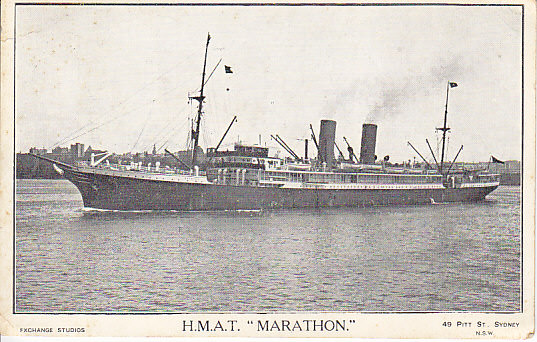
HMAT A74 Marathon

H.M.A.T. 'Marathon' A.74,

2nd July, 1916.

To Lieut.-Col. L. J. Morshead, Oflicer Commanding, 33rd Battalion, A.I.F.

Sir, — I ask you to accept this flag as a 'memento' of our long cruise together, a distance of over 15,000 miles, a record transport voyage. Not only as a 'memento of a record' do I ask your acceptance of this, but as symbolizing the daily increasing, and unbroken good feeling which has existed throughout our ten weeks of 'shipmatehood,' not only between you and me personally, but between every member of my crew, and with out exception, everyone of the officers and troops under your command. This flag is to us all that is emblematic of the Great Empire which you and ourselves serve in our varying spheres, and I know that in your keeping it will remain as always, inviolate. The super-imposing of the regimental number is to me a guarantee of this. We are soon to part, and my chances of seeing much more of you all, will be, in the next few days, curtailed, but before you go I will ask you to convey to all under your command my appreciation in the working of this ship. That you may have the best of luck, and return safely to your own great country, and to those you hold dear, is the sincere wish of us all. For the officers, engineer-officers, and crew of the transport. 'Marathon'

I sign.

W. M. JERMYN,

Master.

Moree Gwydir Examiner and General Advertiser (NSW : 1901 - 1940) Friday 15 September 1916.

Captain W. M. Jermyn

H.M.A.T. 'Marathon.'

My dear Captain,

On behalf of the officers, non-commissioned officers, and men under my command, I have to heartily thank you for your compliment in presenting us with the transport flag. It will be our constant endeavor to prove ourselves worthy of its keeping. To us it is a very high privilege to fight under the flag, standing, as it does, for justice, righteousness, chivalry and honor. I take this occasion to express to you the very real thanks of all on board for the many kindnesses and courtesies, and the marked thoughtfulness always shown by yourself, your officers and crew. Throughout our long voyage perfect harmony has prevailed. The fact that I have not had occasion to make a single complaint speaks for itself. All are, indeed,exceedingly grateful. We shall always look back on our ten weeks on the 'Marathon' with the greatest of pleasure, and with the kindliest recollections of her worthy Captain. All ranks join in wishing you, your officers, your engineer-officers, and your crew the very best of good fortune.

I am, yours very truly,

L. J. MORSHEAD,

Lieut.-Colonel, Commanding 33rd Battalion, A.I.F.

10th August 1917.

Informant; Private: 1487 George MILLER I believe that the word came through to the Battalion from Germany they Captain: Charles Henry LINKLATER (33rd Battalion C Company) is a prisoner. Lieutenant Colonel: Leslie James MORSHEAD would confirm this. He was captured in June at Messines while taking a strong point.

3rd Southern General Hospital. Cowley, Oxford.

Home address; Easter Breich Farm, West Calder, Scotland.

4th September 1917.

Informant; Corporal: 1647 Ernest Albert Fraser 9th Light Trench Mortar Battery. Refer to Lieutenant Colonel: Leslie James MORSHEAD Officer Commanding 33rd Battalion who is still in France and who received word that Captain: Charles Henry LINKLATER was wounded and that he was a Prisoner of War in Germany.

3rd Australian Auxiliary Hospital, DARTFORD, England.

11th March 1919

Informant; Lieutenant Colonel: Leslie James MORSHEAD Commanding Officer 33rd Battalion Headquarters. Captain: Charles John DOIG was in charge of D Company, 33rd Battalion, and on 1-10-1918 sfter crossing the HINDENBERG LINE near BRAY and prior to making and advance on LE CHATELET, he was sitting in a shell hole explaining the proposed operation when a enemy 6" shell fell close by and a fragment struck him in the head. Death was instantaneous. He was buried by Chaplain BURKETT of this Battalion, the C.O. Adjutant, and other Officers attending the funeral. a suitable cross was erected by us. He was buried at WIANCCURT.

A.I.F. Headquarters 13-3-18.

Armidale Memorial
Armidale Memorial
Armidale War Memorial
MORSHEAD, Sir LESLIE JAMES (1889-1959), soldier and businessman, was born on 18 September 1889 at Ballarat East, Victoria, sixth child of William Morshead, a miner from Cornwall, and his South Australian-born wife Mary Eliza, née Rennison. Leslie attended Mount Pleasant State School, belonged to Ballarat's Christ Church Cathedral choir, and captained its football and cricket teams. Having qualified at Melbourne Teachers' College, he taught in the country at Fine View State School, near Jung, and at The Armidale School, New South Wales. In 1914 he moved to Melbourne Church of England Grammar School where he commanded the cadet corps, as he had done at Armidale.

On 13 September 1914 Morshead was appointed lieutenant, Australian Imperial Force. Posted to the 2nd Battalion, he served as a captain at the Gallipoli landings on 25 April 1915 and as a major in the bitter fighting at Lone Pine in August. His reputation for calmness and organization brought him promotion to lieutenant colonel and command (April 1916) of the 33rd Battalion, which he raised in Australia and trained there and in England. He made the battalion 'one of the very best' and took it to France in November. As the 33rd was part of the 3rd Division, Morshead developed under the eye of (Sir) John Monash. A successful leader in the battles of Messines (June 1917) and Passchendaele (October) in Belgium, and Villers-Bretonneux (April 1918) and Amiens (August) in France, Morshead was awarded the Distinguished Service Order (1917) and mentioned in dispatches five times; in 1919 he was appointed C.M.G. and to the French Légion d'honneur.

Monash included Morshead in his staff when he took charge of demobilizing the A.I.F. in England, an operation notable for its efficiency. Morshead reached Sydney in December 1919 and his appointment terminated on 15 March 1920. Intending to begin life on the land, he applied for a grant under the soldier-settlement scheme. While he waited, he worked as a jackeroo at Merriwa. After obtaining a large block near Quilpie, Queensland, he soon realized that he had neither the knowledge nor the capital to make a success of it. At Scots Church, Melbourne, on 17 November 1921 he married 23-year-old Myrtle Catherine Hay Woodside, whom he had known since his days at Melbourne Grammar.

Morshead obtained a job in Sydney, working for a committee representing overseas shipping lines, which led in 1924 to a post with the Orient Steam Navigation Co. Ltd. Next year he was sent to England to familiarize himself with the head office. Thereafter he moved between Sydney, Melbourne and Brisbane in positions of growing responsibility, becoming branch manager in Sydney in 1936. His special interest lay in the development of Pacific cruises. In 1937 he again visited England; part of his time there was spent observing British army training. He had been active in the Militia, commanding in turn the 19th and 36th battalions. Promoted colonel (1933) and temporary brigadier (1938), he led the 14th (1933), 15th (1934-36) and 5th (1937-39) infantry brigades.

On 13 October 1939 Morshead was appointed to the A.I.F. and given command of the 18th Brigade which sailed for Britain in May 1940. He spent five months training the 18th and leading it in operations while Britain came under attack by the Luftwaffe and faced the threat of invasion. It was a stimulating preparation for battle. In January 1941 he was appointed C.B.E. Moving to the Middle East, he was promoted major general in February and placed in command of the 9th Division . He faced a grim prospect. There were insufficient weapons and equipment, his men were relatively untrained, and one of his brigades was short of a battalion. As his own gunners were not ready, he was given British artillery. Within three weeks he was ordered to move this improbable collection to Cyrenaica, Libya, to join the weak force under Lieutenant General Sir Philip Neame guarding the desert flank of the Middle East.

Of middle height, trim in build, and dark haired, Morshead was vigorous and resolute. His insistence on discipline and hard work brought him the nickname, 'Ming the Merciless', which in time became 'Ming'. While it was rare for him to remove an officer, he could be hard and unforgiving. He had a capacity for dealing bluntly with senior officers. On one occasion he tackled Neame about the anti-Australian tone of a letter on the behavior of Australian soldiers in Cyrenaica. When he met General Sir Archibald (Earl) Wavell, the commander-in-chief, Morshead spoke frankly about the dangerous position allotted to his leading brigade and suggested moving back to a defensible position east of Benghazi. Wavell ordered Neame to make the change.

During the withdrawal to Tobruk in April 1941, Morshead was the only general officer of Cyrenaica Command to avoid capture. That his division reached Tobruk almost exhausted but still an organized force and eager 'to have a go', was a commendable performance. Initially, he came under the command of Major General (Sir) John Lavarack. Morshead's task was to hold the perimeter defences which he had inspected closely in January. 'There'll be no Dunkirk here', he told his principal officers, 'There is to be no surrender and no retreat'. He also issued instructions that, if German tanks penetrated the perimeter, the infantry should not engage them but deal with enemy infantry following the tanks which would be stopped by his own artillery. These tactics, new to the Germans, led to the failure of their assault on 14 April.

That day Morshead succeeded Lavarack as commander of the fortress at Tobruk. He maintained an aggressive defence, based on ceaseless patrolling and—in the early days—frequent raids, and made it clear to all that 'we should make no-man's land our land'. Whenever the enemy gained ground, he refused to leave it in their hands. His policy sometimes proved costly and was disliked at brigade and unit level.

As the siege dragged on, Morshead agreed with the medical authorities that the physical condition of his men was declining. He supported Lieutenant General Sir Thomas Blamey in his efforts to have the 9th Division and its supporting troops relieved. Morshead's plea for more periodical decorations and mentions in dispatches for the whole garrison was granted. The determination of Blamey and of successive Australian governments eventually brought about the relief of the Australians, beginning in August. After visiting the British gunners and others who were to remain, Morshead unveiled a memorial and left Tobruk on 22 October 1941 in H.M.S. Endeavour.

Morshead and his mixed force of Australian, British, Indian and Polish troops had won an important defensive battle. Not only had they denied the Axis powers the port of Tobruk, but they had also compelled General Erwin Rommel to hold a significant part of his army back from the Egyptian frontier for six months. They had shown that the Nazi juggernaut could be stopped. It was a heartening success in an otherwise gloomy year. Morshead was appointed K.B.E. (1942) as a modest recognition of his achievement, and the Poles awarded him the Virtuti Militari. On Blamey's departure for Australia, Morshead took command of the A.I.F. in the Middle East in March 1942 as a temporary lieutenant general (substantive in September). He continued as commander of the 9th Division, which trained in Palestine and Syria until June when it was ordered to Egypt.

Morshead had to fight for essential equipment and transport, and to resist the penchant of senior British officers for breaking up divisions. In a famous confrontation with General Sir Claude Auchinleck in early July, Morshead flatly refused to give him one of his brigade groups. Only when it was agreed that the entire 9th Division would move to El Alamein under his command would Morshead permit the temporary detachment of a single brigade group. He closely watched how the British prepared to use that brigade in operations and remonstrated with Auchinleck about its lack of artillery protection. On 15 July, when he learned that his 20th Brigade had been moved without any reference to him, Morshead protested vehemently to Auchinleck who agreed to its return.

July 1942 was a testing time for Morshead and his men who in three searing weeks tasted everything from triumph on the 10th to disaster on the 27th when the whole 2nd/28th Battalion was lost. Nevertheless, the spirit of the division was strong, and there was a growing trust between the troops and their commander. Morshead was critical of Auchinleck and his staff, and, like all the infantrymen, had a deep distrust of the armoured regiments and brigades.

Before the battle of El Alamein (23 October-5 November) Morshead told his commanders, 'We must regard ourselves as having been born for this battle'. He argued strongly for the retention of the 10 p.m. zero-hour in the face of a proposed earlier time, understanding the needs of the men in the attacking companies, and the importance of getting their vehicles and gear into position. During the fighting he went forward to see his brigadiers (often twice in a day) and battalion commanders to encourage them and get the 'feel' of the battle. Nor did he neglect the wounded in the field ambulances.

After the initial assault, Morshead's series of attacks northwards threatened to cut off and destroy a German division. This pressure drew upon the 9th Division almost the whole Afrika Korps, thus helping to create a situation favourable to Lieutenant General (Sir) Bernard (Viscount) Montgomery's final thrust. Montgomery visited Morshead on 4 November to congratulate him. Morshead was appointed K.C.B. a few weeks later. Like Monash, Morshead drove 'his troops to the extreme limit of their endurance'. His own practical, undramatic outlook was revealed at his conference after the battle when he urged his commanders not to forget 'to say a good word to the cooks'. To a corps commander's congratulations, he replied: 'Thank you, General. The boys were interested'.

In February 1943 Morshead and the 9th Division came home. Next month he was appointed commander of II Corps. Although this role placed him farther from the battle front than at El Alamein, it did not entirely remove him from operations. At the height of the Japanese counter-attack at Finschhafen, New Guinea, on 17 October, his grasp of the situation caused him to signal urgently for the 26th Brigade to move from Lae to reinforce the 9th Division. After commanding the Second Army in January-July 1944, Morshead took over I Corps. In May 1945, when American planners sought to change the location of the 7th Division's landings at Balikpapan, Borneo, he supported Major General E. J. Milford's choice of beaches. Morshead travelled constantly and regularly visited subordinate headquarters; on 1 July 1945 his Catalina broke up when alighting on rough waters off Balikpapan and all on board had to be rescued.

Morshead's wife shared his burdens in a seemingly endless war. Theirs was a deeply happy marriage in which they sustained each other by their letters through four campaigns. In the field, Morshead played shove-halfpenny for relaxation; he had his own board which always went with him. Arriving in Sydney in September 1945, he reluctantly agreed to chair a military court of inquiry into Major General Gordon Bennett's escape (1942) from Singapore. The court sat in October. Its findings against Bennett led to (Sir) George Ligertwood's appointment as commissioner to investigate the affair. In essence, he reached the same conclusions. Morshead was thrice mentioned in dispatches for his service in World War II and awarded (1948) the American Medal of Freedom with Silver Palm.

The former schoolmaster and lieutenant of cadets was famous, but looking only for the peace of his home and his imminent return to civilian employment. He was to decline offers of military and diplomatic posts, and the governorship of Queensland. Placed on the Reserve of Officers on 1 January 1946, he went back to the Orient Line one day later as its New South Wales manager. In 1948 he became general manager in Australia. Maintaining links with the army, he gave lectures to young officers and belonged to the Australian Battles Nomenclature Committee. There were also the special occasions—Anzac Day, El Alamein dinners and unit reunions—when he was received with acclaim, including the extraordinary 'Ho Ho' cry of the 9th Division which had begun on the Atherton Tableland in 1943.

Morshead was president of the Bank of New South Wales, chairman of David Jones Ltd and of the Bank of New South Wales Savings Bank, and a director of Mutual Life & Citizens' Assurance Co. Ltd and other firms. He was also president of the Boy Scouts' Association of New South Wales and the Big Brother Movement, and a trustee of the Gowrie scholarship trust fund. From 1950 he headed 'The Association', a secret organization prepared to oppose communist attempts at subversion. It was quietly disbanded in 1952. Morshead had had a brief connexion with a similar movement in the mid-1920s. A gifted organizer in war and peace, he was appointed (1957) chairman of a committee which reviewed the group of departments concerned with defence. The Federal government accepted the committee's recommendation that Supply and Defence Production be amalgamated, but dropped the key proposal that Defence absorb Army, Navy and Air.

Golf and membership of the Sydney Cricket Ground gave Morshead respite from the cares of business, but in 1957 he began to show signs of strain. Survived by his wife and daughter, Sir Leslie died of cancer on 26 September 1959 at St Vincent's Hospital, Darlinghurst, and was cremated with Anglican rites. He had been accorded a military funeral and the cortège passed through streets lined with former soldiers of the 9th Division. (Sir) Ivor Hele's portrait of Morshead is held by the Australian War Memorial, Canberra.

Select Bibliography

C. E. W. Bean, The A.I.F. in France, vol 5 (Syd, 1937); D. Dexter, The New Guinea Offensives (Canb, 1961); G. Long, The Final Campaigns (Canb, 1963); B. Maughan, Tobruk and El Alamein (Canb, 1966); D. M. Horner (ed), The Commanders (Syd, 1984); D. Coombes, 'The Greatest Rat': A Biography of Lieutenant General Sir Leslie Morshead.

(Ph.D. thesis, University of Sydney, 1997) Morshead papers (Australian War Memorial)

Funeral Procession 1959
Funeral Procession 1959.
Military Records
World War 1 Records
World War 1 Records
World War 1 Records
World War 1 Records
World War 1 Records
World War 1 Records
World War 1 Records
World War 1 Records
World War 1 Records
World War 1 Records
World War 1 Records
World War 1 Records
World War 1 Records
World War 1 Records
World War 1 Records
World War 1 Records
World War 1 Records
World War 1 Records
World War 1 Records
World War 1 Records
World War 1 Records
World War 1 Records
World War 1 Records
World War 1 Records
World War 1 Records
World War 1 Records
World War 1 Records
World War 1 Records
World War 1 Records
World War 1 Records
World War 1 Records
World War 1 Records
World War 1 Records
World War 1 Records
World War 1 Records
World War 1 Records
World War 1 Records
World War 1 Records
World War 1 Records
World War 1 Records
World War 1 Records
World War 1 Records
World War 1 Records
World War 1 Records
World War 1 Records
World War 1 Records
World War 1 Records
World War 1 Records
World War 1 Records
World War 1 Records
World War 1 Records
World War 1 Records
World War 1 Records
World War 1 Records
World War 1 Records
World War 1 Records
World War 1 Records
World War 1 Records
World War 1 Records
World War 1 Records
World War 1 Records
World War 1 Records
World War 1 Records
World War 1 Records
World War 1 Records
World War 1 Records
World War 1 Records
World War 1 Records
World War 1 Records
World War 1 Records
World War 1 Records
World War 1 Records
World War 1 Records
World War 1 Records
World War 1 Records
World War 1 Records
World War 1 Records
World War 1 Records
World War 1 Records
World War 1 Records
World War 1 Records
World War 1 Records
World War 1 Records
World War 1 Records
World War 1 Records
World War 1 Records
World War 1 Records
World War 1 Records
World War 1 Records
World War 1 Records
World War 1 Records
World War 1 Records
World War 1 Records
World War 1 Records
World War 1 Records
World War 1 Records
World War 1 Records
World War 1 Records
World War 1 Records
World War 1 Records
World War 1 Records
World War 1 Records
World War 1 Records
World War 1 Records
World War 1 Records
World War 1 Records
World War 1 Records
World War 1 Records
World War 1 Records
World War 1 Records
World War 1 Records
World War 1 Records
© Commonwealth of Australia (National Archives of Australia)

Under Construction: 16/09/2007-10/06/2016.